

Baix Empordà
The Baix Empordà coastline runs roughly from just south of L’Escala down to Sant Feliu de Guíxols. We’ve also allowed ourselves one small ‘cheat’ into the neighbouring comarca of La Selva, right where the Costa Brava comes to an end, and the Costa del Maresme begins.
Ranking beaches from ‘best’ to ‘worst’ would be entirely subjective, so instead we’ve listed them from north to south. You decide your own favourite. We use the local Catalan names throughout, as that’s how you’ll find them on Google Maps. Platja simply means beach. Easy.
Platja de Pals → Platja de L’illa Roja
We’re starting with a small cheat straight away. Why settle for one beach when you can njoy three, or even four, in one go?
From L’Estartit heading south, the coastline forms an almost uninterrupted stretch of sand for more than 8 km, changing names as it goes but never really breaking. The best section is the southern end, where Platja de Pals blends into Platja del Racó, marking the boundary between Pals and Begur.
From here, a short section of the Camí de Ronda leads to Platja de L’illa Roja, named after the distinctive reddish rock that rises from the centre of the cove. It’s a long-time favourite with naturists, though families and non-nudists are increasingly drawn here too.
After a brief and controversial flirtation with a beach bar in 2021, the cove returned to its more natural state. It remains one of the most iconic nudist beaches on La Costa Brava, and despite its small size, one of the most photographed.
Continue along the coastal path, and you’ll reach Platja Sa Riera, another compact gem. Park at Platja del Racó, walk the path, swim, repeat. A perfect half-day adventure – cheating fully justified.

Platja de Tamariu
A small sandy beach in a postcard-perfect village. Tamariu beach is short but beautifully framed by rocky headlands, clear water and a row of seafront restaurants and cafés.
Just a five-minute drive away lies Cala d’Aigua Xelida, tiny, wild and ideal for snorkelling. You can also walk there via a coastal trail that’s a little challenging but absolutely worth the effort.

Calella de Palafrugell
Not one beach, but several small coves wrapped around one of the most charming seaside villages on the coast. Whitewashed fishermen’s houses, arcades by the sea and excellent seafood restaurants define Calella’s appeal.
A quick note of caution: there’s another Calella much further south. Make sure you search for Calella de Palafrugell. This one really is the good one.

Cala Estreta
South of Calella de Palafrugell, the Camí de Ronda leads through a sequence of secluded coves. This part of the trail takes you along the coast via some exquisitely beautiful sandy beach coves: Cala del Crit, Cala Cap del Planes, Cala Roca Bona, before reaching Cala Estreta. It’s remote, lightly developed and beautifully quiet, even in summer.
Lonely Planet named this stretch one of their 100 Best Beaches in the World in 2024, and they weren’t wrong. Clothing here is entirely optional.

Platja de Castell
If there is one beach that perfectly represents the spirit of the Costa Brava, this is it. Wide sand, pine forest, zero urban development.
Saved from construction in the 1990s by local protest, Platja de Castell is now protected as an Area of National Interest. At one end lie the remains of a pre-Roman Iberian settlement; at the other, crystal-clear water ideal for kayaking or snorkelling.

Platja La Fosca
Just beyond Castell lies La Fosca, overlooked by the ruins of Castell de Sant Esteve. Easily accessible, gently sloping into the sea and dotted with casual beach bars, it’s a firm favourite with families.

Platja Gran de Palamós → Sant Antoni → Torre Valentina
One long, generous beach stretching nearly 4 km, accompanied by a lively promenade. Despite its popularity, it never feels cramped.
Ideal for water sports, strolling, swimming and sunset drinks. Plenty of xiringuitos along the way. Everyone fits here.

Platja Sa Conca
Sheltered, elegant and beautifully maintained, Sa Conca offers golden sand and calm, transparent water. Close to parking, well-equipped and gently sloping, it’s perfect for relaxed family days.

Platja de Sant Pol
A little further south along an easy section of the Camí de Ronda lies Sant Pol. A wide, shallow bay with sailing schools, kayak hire and plenty of space to spread out. One of the most accessible beaches on the coast.

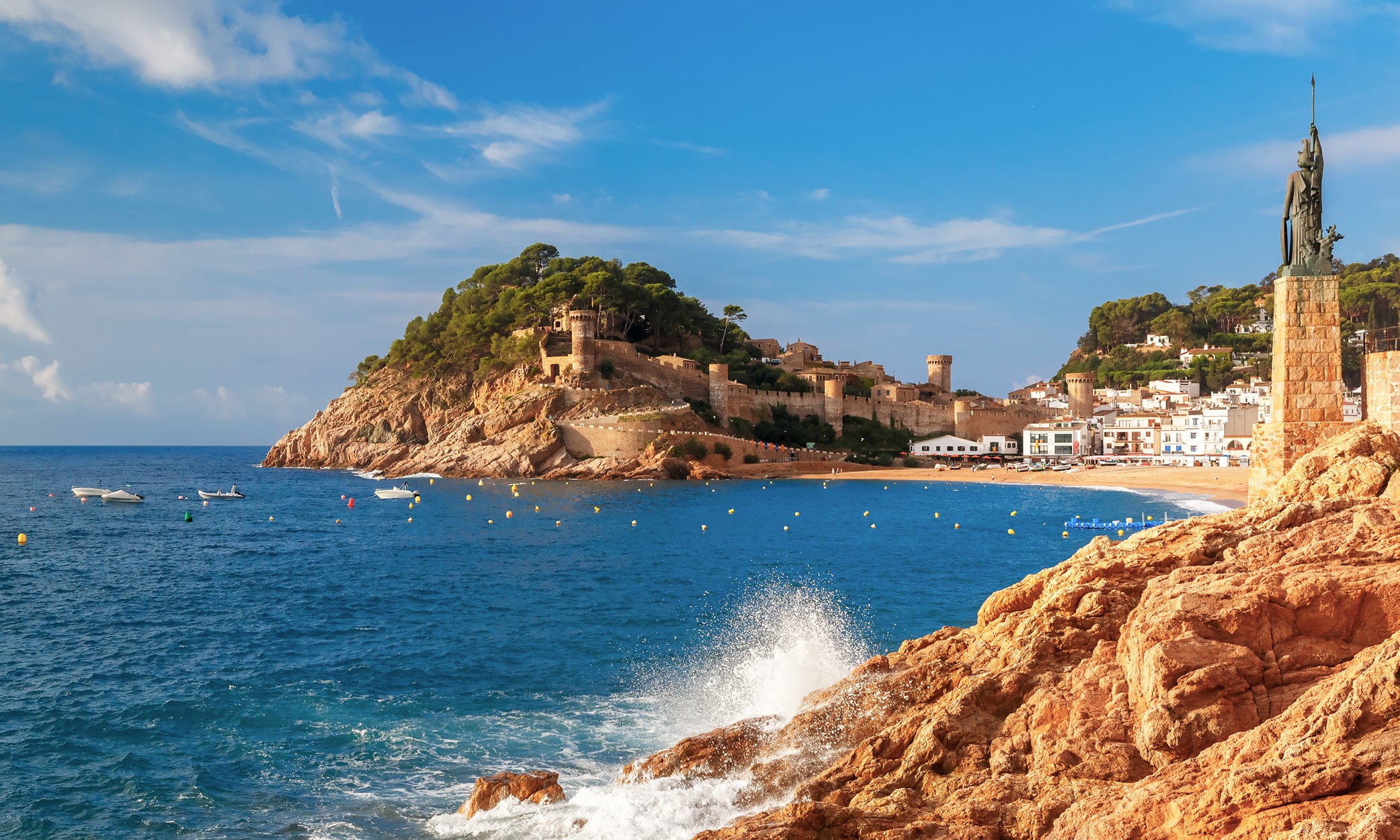
Platja Gran, Tossa de Mar
Tossa’s main beach combines history, water sports and a lively promenade. It was once named one of National Geographic’s Top 25 Beaches in the World, and it’s easy to see why.
Our ‘best’ Costa Brava beaches
So there you have it. Ten beaches, plus one gentle rule-breaker. Sandy, wild, family-friendly, naturist, sporty, historic – the Baix Empordà delivers it all.
Ask someone else for their Top 10 and you’ll get a different list. That’s exactly how it should be.
Dog-friendly beaches on La Costa Brava
Most beaches don’t allow dogs during the summer season, but there are a few exceptions. If you’re travelling with a four-legged companion, take a look at our dedicated guide to dog-friendly Costa Brava beaches and the interactive map. The choice is limited – but some of them are genuinely lovely.
