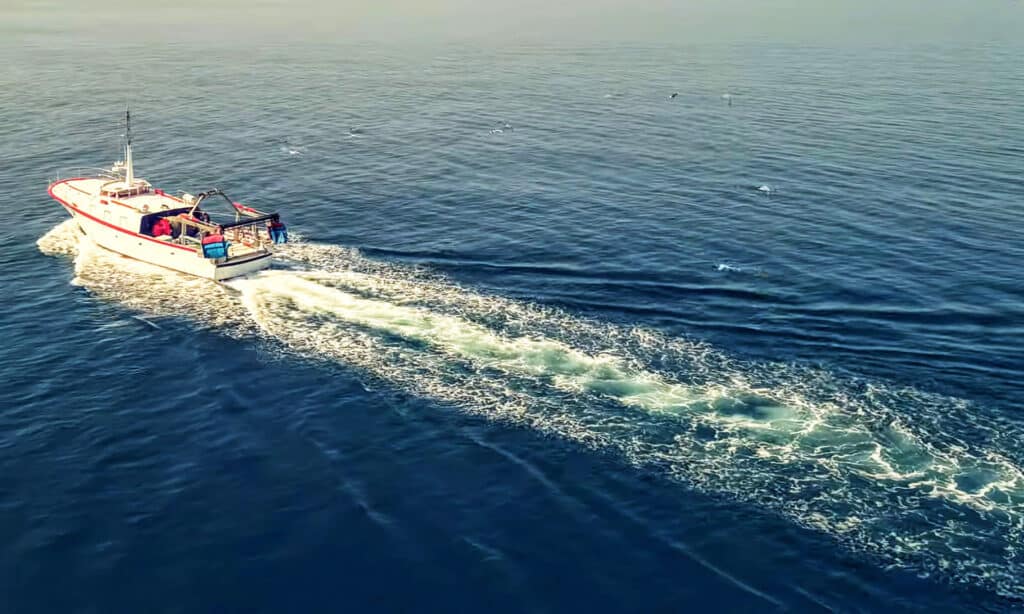
So, what are Gambas de Palamós?
Well, first of all, the word ‘gamba’ translates as ‘prawn’ or ‘shrimp’ in, conveniently, both Castellano (Spanish) and Catalan. Although the plural in Castellano is ‘gambas’, it is ‘gambes’ in Catalan, and both are pronounced similarly. So why are they called ‘Palamós prawns’ specifically, considering that the species can be found all around the Mediterranean Sea and also in the Atlantic Ocean between Portugal and Cabo Verde? Well, come to that in a little bit, but first, a little history.
The ‘Palamós prawn’ is a crustacean of the species Aristeus antennatus that typically lives at a depth of about 400 metres or more. Until the 1930s, the species was not very well known or fished in these parts, but around that time, the trawlers of the Catalan fishing fleet began to be motorised, allowing them access to fishing grounds found at much greater depths.
With these improvements to the fishing industry, (from the point of view of the fishermen that is, not the shrimp!), many fishermen from southern Catalunya, especially Tarragona, and also from the Comunidad de Valencia, started migrating north to fish the waters off La Costa Brava, and, as Palamós had been a port and a fishing town since the mid-1200s, many of them settled there and in other nearby fishing villages, bringing with them some more efficient trawling techniques.
Then, in the middle of the last century, important new fishing grounds began to be discovered offshore, in particular around La Fonera and Canyó de Palamós, attracting more migrant fishermen. Today, the fishing fleet of Palamós is the biggest on La Costa Brava.
El Pedró, Palamós
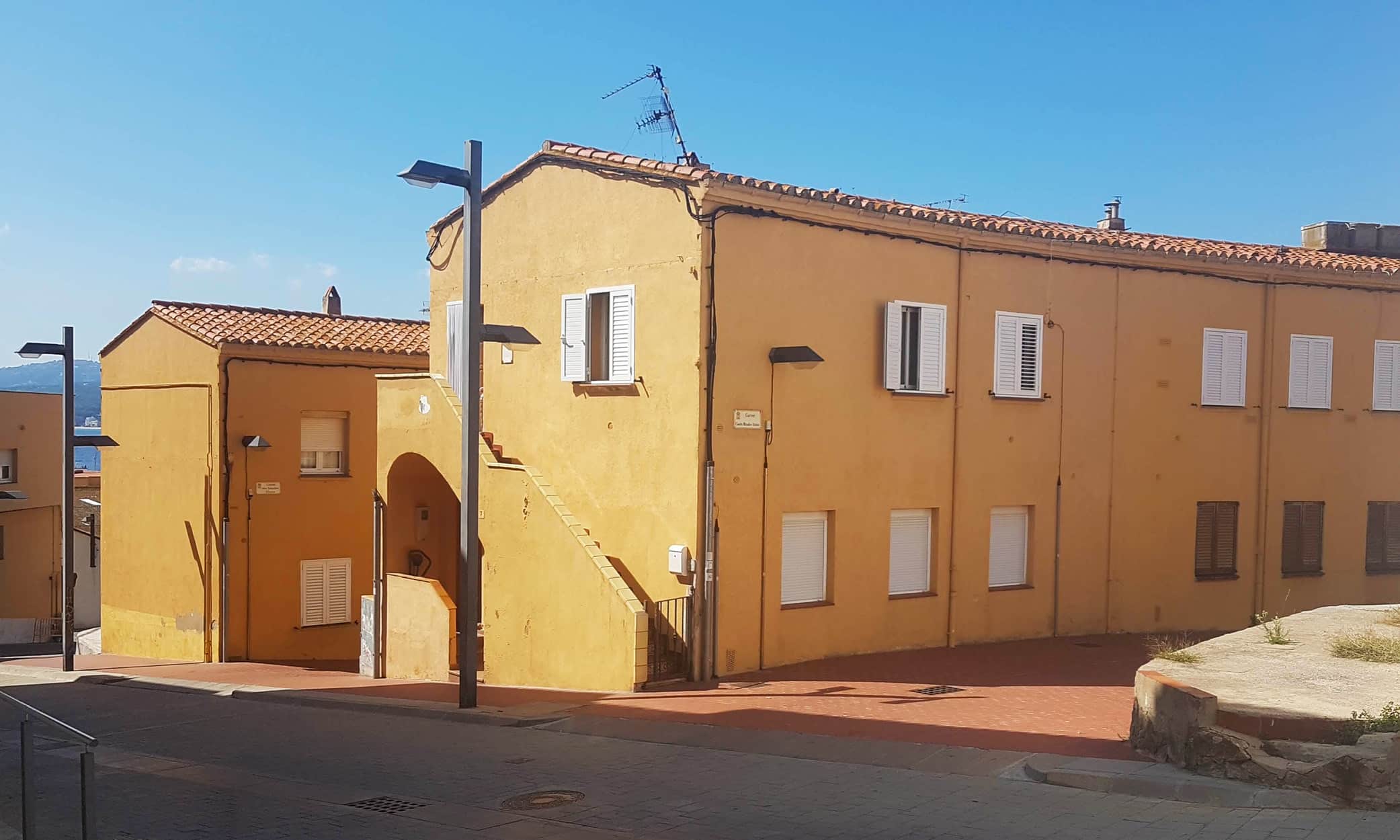
This migration of fishermen north to La Costa Brava obviously had an impact on the fishing towns of the region, creating the need for additional housing, in particular. The Confraria de Pescadors de Palamós (Fisherman’s Guild) obtained land in the neighbourhood of El Pedró in the old part of the town and, over time, built suitable houses for these migrant fishermen and their families. Most of those houses remain virtually unchanged to this day.

Modernization
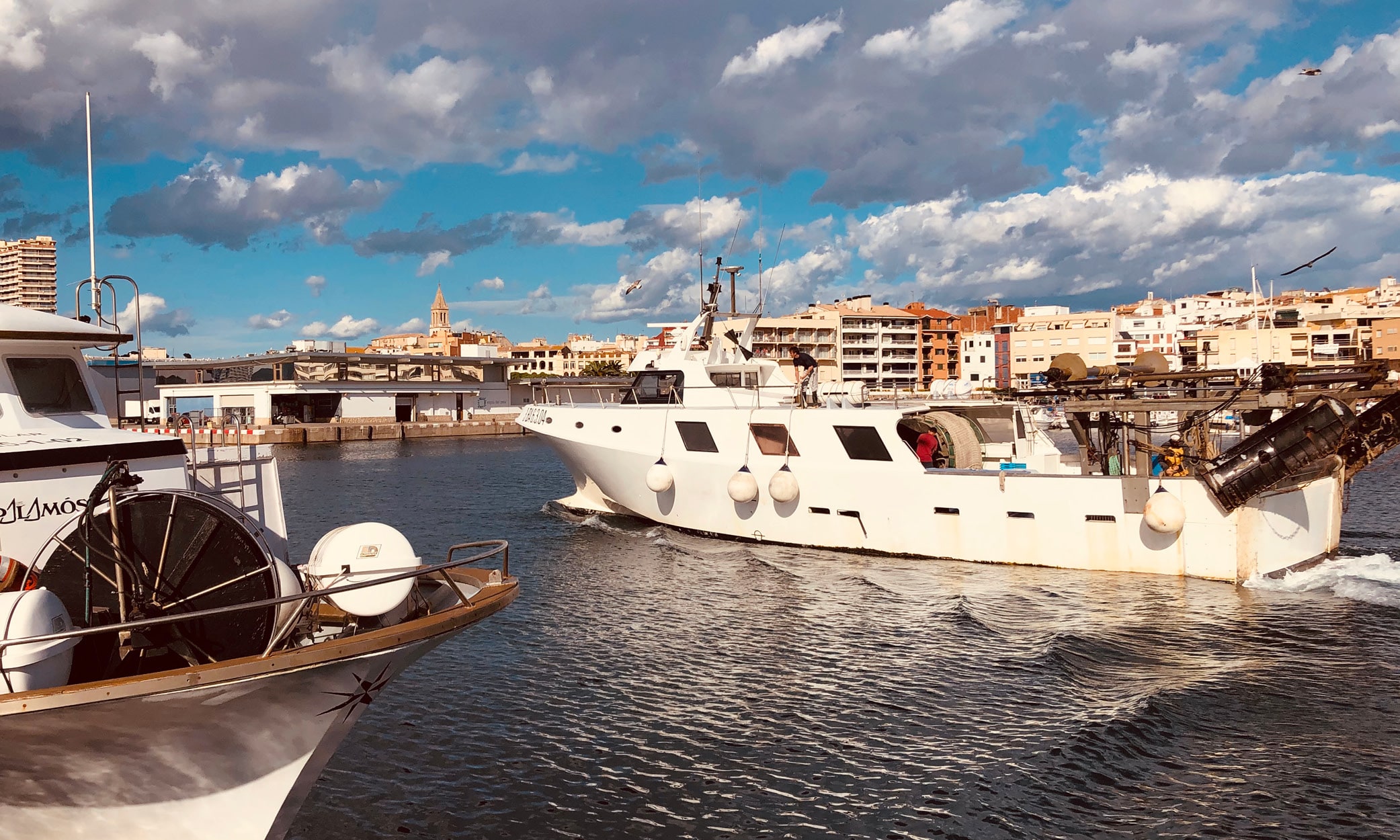
From the 1950s on, fishing fleets along the Costa Brava continued to grow, both in the number of fishing boats and in terms of the size and power of the vessels. In the 1960s, as part of a national plan to rebuild the Spanish fishing industry after a decline resulting from the Civil War, followed immediately by World War II, fishermen were offered easier lines of credit in order to invest in larger and more modern fishing boats. This resulted in the fishing fleet increasing its shrimp-fishing capacity, in particular, by about 400% by the 1980s. (If we calculate from the 1950s to today, the fleet’s capacity has increased by over 8000%!).
Overfishing
In the 1980s, some began to voice concern about the scale of fishing here and the long-term effects it could have on the industry. By the 1990s, there was no longer any doubt as the symptoms of overfishing were clear for all to see, with catch figures in constant decline. As a result of this overexploitation, the pioneering Pla de Gestió de la Gamba de Palamós, or ‘Palamós Prawn Management Plan’, was established in 2013, the first of its kind in the western Mediterranean. It is a cooperative designed and run by local fishermen themselves, with the participation of the scientific community.
One of the more obvious steps taken by this co-op to secure the long-term future of the fishing industry is the 8-week moratorium on fishing starting from the first weekend after the Día de Reyes on 6 January every year. In order to guarantee the supply to the markets, the exact dates and areas where the moratorium is implemented are rotated between the various fishing fleets.
These measures apply to 22 vessels with their base port in Palamós and 7 fishing grounds located along the Canyó de la Fonera: Rostoll, Candelero, San Sebastián, Abyssinia, Els Clots, Llevant, and La Malica.

Gamba de Palamós: Marca de Garantía
And so, finally, we come to the name. As mentioned at the start, the species of prawn that the Palamós variety belongs to can be found throughout most of the Mediterranean and parts of the Atlantic Ocean. In 2009, however, Gambas de Palamós was created as a specific brand, certifying the origin and quality of the prawns caught in the waters off the coast of the port.
This is similar in purpose to the Denominación de Orígen labels you will see on bottles of wines in Spain in that it guarantees that the live, fresh, or frozen prawns bearing the Gambas de Palamós; marca de garantía, were fished from “the extraction areas of Palamós and collected under the conditions of the regulations for the use of the brand that requires compliance with the best conditions of handling, temperature and storage in the treatment of the product, from the point of origin to the final consumer.”
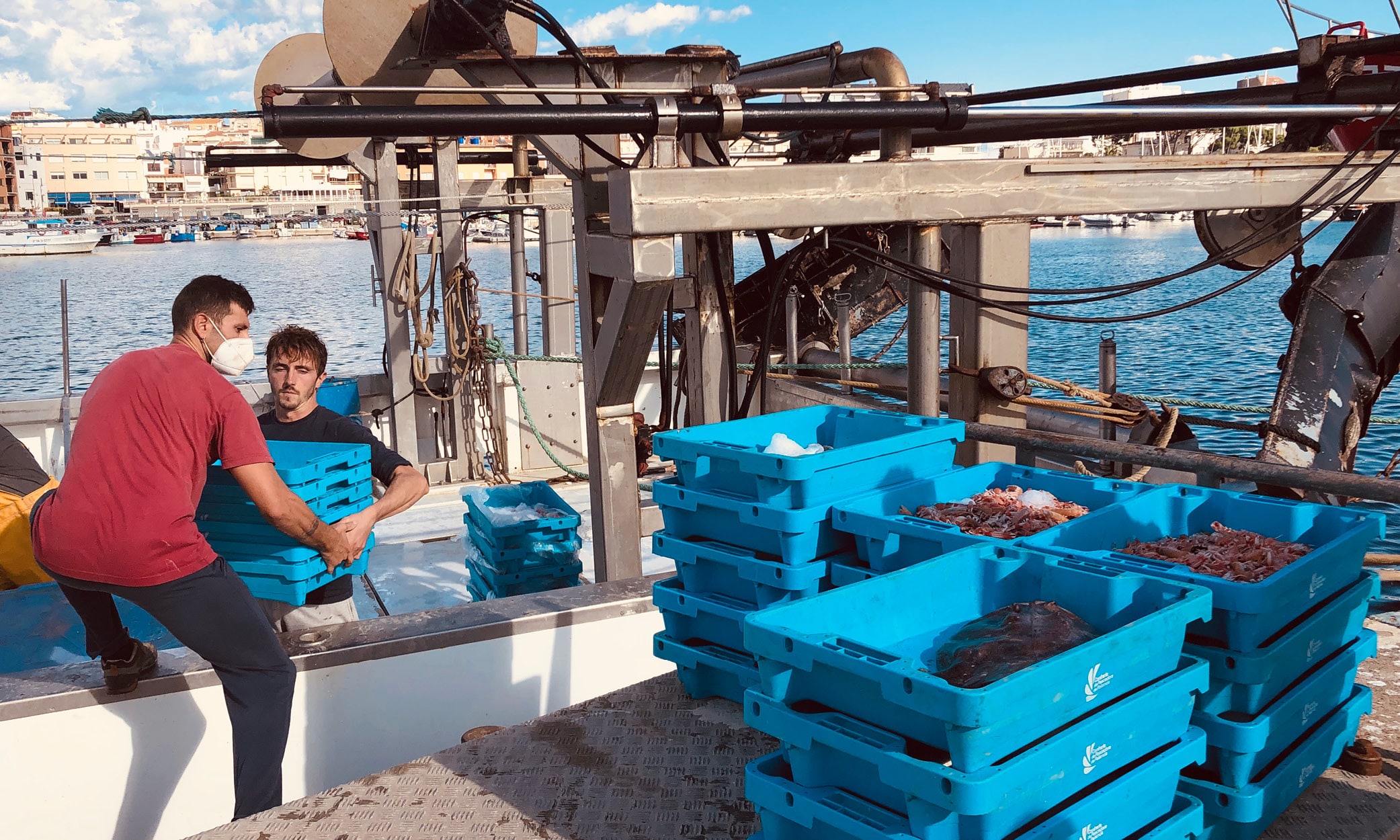
On a daily basis, all shrimp caught are subjected to quality control, which identifies the fishing ground and ensures that criteria such as appearance, texture, units per kilo, and temperature upon arrival in port are met before being passed fit for auction in the fish market. Only those that satisfy the requirements established by these regulations will be officially labelled as ‘Gambas de Palamós’. You may find the same species of prawn elsewhere under a different name, but without the same guarantee of quality.
If you happen to be buying your shrimp (or other seafood) in a Mercadona supermarket, by the way, you’ll notice that the produce is displayed in either a blue or a green box. There’s a reason behind this, which is to differentiate between what was raised on a fish farm, frozen, and then thawed for sale – blue box; from fresh seafood that was caught wild and never frozen – green box. Anything bearing the Gambas de Palamós brand, therefore, should be found only in a green box.
Productes de l’Empordà
In addition to the Gambas de Palamós seal of approval, this product was also incorporated into the Productes de l’Empordà brand guarantee in 2015. This label features only the finest products from the Empordà region, which means both the prawn and fish markets are subject to periodic rigorous examination in a food laboratory. The laboratory conducts controls on the prawns at various stages of production and certifies their quality (or does not). The purpose of Productes de l’Empordà is to promote and market products specifically from the region, so only the very best are awarded the label.
Museu de la Pesca
Right beside the fish market, the Museu de la Pesca looks at the past, present and future of fishing on the Costa Brava. Housed in a former harbour building, the museum covers traditional fishing, life at sea and the changes facing the Mediterranean today.
The museum also organises visits to the fish auction, activities around the local fishing fleet and other programmes connected to Palamós’ maritime culture. The fish market itself is open in the afternoon from Monday to Friday, when the day’s catch is brought ashore and sold.
For opening times, tickets and current activities, see our Museu de la Pesca guide.


Espai del Peix
Next to the fish market, Espai del Peix is the museum’s gastronomic classroom. Its workshops, show-cooking sessions and tastings focus on local fish and traditional fishermen’s cooking, including species that are less familiar or less commonly used at home.
It is a useful place to understand what happens after the catch reaches the harbour: how local fish is identified, prepared and cooked, and how Palamós’ fishing traditions continue in the kitchen.


Pescaturisme Palamós
For a closer look at fishing today, Pescaturisme Palamós takes small groups aboard the Estrella del Sur III for a working day at sea with its crew. Participants see the fishing operation at first hand, learn about the catch and the work on board, and experience a side of Palamós that most visitors only see from the harbour.
Trips currently operate on selected Tuesdays and Wednesdays, starting early in the morning and returning later in the afternoon. Numbers are limited and departures depend on fishing conditions and the weather, so check current dates, prices and availability before booking.