

Queso or formatge?
The Spanish word for cheese is queso, derived from the Latin caseus formatus, meaning moulded cheese. The Catalan word formatge also comes from ‘formatus’, as do the French ‘fromage’ and the Italian ‘formaggio’.
Cheese across Spain
Although not as famous for its cheeses as its illustrious neighbours on the other side of the Pyrenees, Spain has a surprisingly wide range of regional varieties, well over 100 in total. Its warmer, drier climate, compared with northern European cheese-producing countries, is reflected in the character of its cheeses.
Generally speaking, the Atlantic regions of Galicia, Asturias, Cantabria and the Basque Country tend to produce more cheeses from cow’s milk, while the interior regions use more sheep’s milk.
From Catalunya through Valencia and Murcia to Andalucía, as well as on the Canary Islands and the Balearics, goat’s milk cheeses are more common. Mixed-milk cheeses are also widely produced.
Like wine, olive oil and cured meats, many Spanish cheeses carry protected designations of origin such as D.O.P. (Denominación de Origen Protegida) or I.G.P. (Indicación Geográfica Protegida), guaranteeing their regional origin and traditional production.
Cheese styles in Spain
Spanish cheeses can broadly be divided into three categories:
- Fresh cheese (queso fresco) – not aged
- Semi-curado – aged between two and four months.
- Curado – aged for at least four months, often much longer.

A selection of Spanish cheeses
Spain produces well over a hundred different types of cheese, many rooted in regional farming traditions and local milk. The cheeses below offer a small selection from across the country, from the Atlantic north to the Mediterranean and the islands.
Manchego – Castilla-La Mancha
Manchego is Spain’s most famous cheese, both at home and abroad. It takes its name from its region of origin, Castilla-La Mancha and is believed to have been produced on its arid plains for hundreds, if not thousands, of years, possibly even since the Bronze Age, using only milk from native Manchega ewes. It is known to have been used in barter with shepherds due to its durability, and it also features in Cervantes’ literary masterpiece, Don Quixote, so it certainly has history.
Its D.O.P. requires it to be aged for at least 60 days (semi-curado) and up to 2 years (curado), and it is recognisable by the zigzag pattern on its rind. The semi-curado is generally quite mild, with a slightly sweet, nutty flavour, and the flavour intensifies in the curado version with its longer ageing. Manchego is especially popular in tapas restaurants and pairs well with cured ham and a Rioja wine, sherry or cava. There is also a Manchego Artesano, made with raw milk, which is spicier and peppery. Manchego accounts for about a third of the country’s traditional cheese production!

Cabrales – Asturias
For most people, Cabrales is one of those strongly flavoured cheeses! It’s a strong-smelling and tasting, handmade, acidic, gourmet blue cheese made from either solely raw cow’s milk or more traditionally with a mix of raw milk from cows, sheep and goats that have grazed on the mountains of the Picos de Europa in Asturias. It is matured for 2-5 months in caves aired by cold, damp, salty winds from the Bay of Biscay that create a near constant humidity of 90% and steady temperature of 8-12 °C, ideal conditions for the growth of the penicillium spores, which give the cheese its characteristic blue-green veins and patches.
It is regularly cleaned and turned during ageing, matures from the inside out and is not injected with bacteria. As per its D.O.P., which it has had since 1981, it must contain at least 45% fat, so its texture is firm yet creamy. The story goes that shepherds who spent long months in the mountains with their herds began making this type of cheese to avoid wasting milk, and nowadays it is made on small family farms in the area, so it is not produced in huge quantities. It was named the best cheese in Spain in 2013.

Tetilla – Galicia
The cheese takes its name from its distinctive conical shape, which resembles a small breast. Tetilla means nipple in Galician/Spanish. Tetilla is a semi-soft variety made from the milk of three breeds of cow that graze on the rich grass of the hills and mountains of NW Galicia: Friesian, Alpine Brown (Rubia Gallega). It is cured for only 7 days, or at most a month, and its flavour is mild and buttery. It is often eaten with membrillo, chorizo or jamón serrano. It has had a D.O.P. since 1993.

Mahón – Menorca
Mahón shares its name with the principal town on the Balearic island of Menorca, which is named after. In the local Catalan dialect, menorquí, it is called Maó, and it is one of the very few cheeses from the Atlantic north of Spain made with only cow’s milk. There are a few versions made with a mix of pasteurised cow and sheep milk, but the best is the artisanal Mahón, made with raw cow’s milk and cured in underground cellars for at least a couple of months and up to two years, sometimes even longer.
It is shaped into squares using a special cloth, and during the maturity process, olive oil and paprika butter are rubbed into the rind for even more flavour. Its texture is quite dense and crumbly, and its taste is nutty, buttery, and slightly salty. Mahón has had a D.O.P. since 1985.

Torta del Casar – Extremadura
This cheese is different! First of all, the ‘torta’ in the name means ‘cake’ and refers to its form, and ‘del Casar’ refers to its origin: Casar de Cáceres in Extremadura, near the Portuguese border. Torta del Casar was traditionally made in the shape of a small wheel, with a fairly thin rind and a soft, runny centre that would cause the middle to sink as it aged, giving it the appearance of a cake.
It is made from the raw milk of Merino and Entrefino sheep and uses the flowers of local Cardoon thistles to curdle the milk, rendering the cheese soft and sticky. It is aged for a minimum of two months and is eaten by cutting the top of the ‘torta’ like a lid, then dipping pieces of bread into it to scoop out the intensely tasty, gooey cheese inside. Or you can just spoon it out and spread it on your bread… Either way, it is ideally accompanied by a glass of port from nearby Portugal.

Idiazábal – Navarra + Basque Country
Originally produced in the Navarran Pyrenees above Pamplona, this rustic ewe’s milk cheese is today made throughout Navarra and the Basque Country from the raw, unpasteurised milk of the Latxa and Carranzana breeds of sheep, cured for 2 months or more, up to 8, and typically smoked. In the old days, it was hung in the rafters near the fireplace to protect it from the rain and to absorb a smoky, woody flavour.
Nowadays, this intense pale yellow, nutty, buttery cheese is commonly eaten as a pintxo with membrillo or is grated over pasta, and it also beautifully accompanies a full-bodied red wine from nearby Rioja. As you’d expect, Idiazábal also has an EU-recognised D.O.P., and in 2013, it won the Super Gold medal in the World Cheese Awards. It has been declared Patrimonio Gastronómico Europeo and is generally considered one of the finest Spanish cheeses.
Roncal – Navarra
Another one from Navarra and also made with milk from Latxa sheep, or from Rasa Aragonesa sheep – the second most important sheep breed in Spain after Merino – this cheese comes from one of seven villages in the Roncal Valley that gives it its name. It is a hard cheese with a herby hint to its buttery flavour. Its EU-recognised D.O.P. guarantees that it can only be made using the milk of the two aforementioned sheep breeds. Like Idiazábal, Roncal pairs very well with wine, which makes sense, given that it comes from a region so renowned for its wines!

Zamorano – Castilla-León
Also from near the Portuguese border, but further north in Zamora (hence the name), this variety is made from sheep’s milk – but there the similarities with Torta de Casar end. It is aged for a minimum of 100 days, often for six months or up to a year, giving it a hard, crumbly texture and a certain sharpness. During ageing, it is regularly turned and rubbed with olive oil, giving the rind a brownish colour. It used to come under the Manchego umbrella until it was given its own D.O.P., indicating that it comes from further north in Castilla-León and is made with milk from different breeds of sheep, namely Churra and Castellana.

Caña de Cabra – Murcia
Caña de Cabra is a goat’s cheese from Jumilla in Murcia made in the French Bûcheron style, a method of producing soft-ripened goat’s cheese that hadn’t existed in Spain previously to 1978. Murciana goats are known for high-quality, high-fat goat’s milk ideal for cheesemaking, and over the years, Caña de Cabra cheeses have won numerous awards.
Ageing takes three weeks, and during this time the flavour sharpens and intensifies, and a silky layer of an edible white mould develops on the outside of the ‘log’. Caña de Cabra has a slightly lemony hint and is especially delicious when baked and served with pine nuts, almonds, figs and honey on top of a salad or on toast, preferably with a crisp, dry white wine.

Majorero – Canarias
Another cheese with a European D.O.P. mark of quality, Majorero from Fuerteventura in Las Canarias, is the first Spanish goat’s cheese to be so recognised. There is even a cheese museum dedicated to Majorero on the island now! The breed of goat in question is the Majorera goat, so they didn’t have to think too long and hard when naming this one, although up to a maximum of 15% of the milk used can be from other Canarian sheep. Majorero milk is relatively thick and high in fat, and this comes through in the pale, whitish cheese, making it quite pungent. It is commonly eaten as a dessert with something sweet, often membrillo.
Afeuga’l Pitu – Asturias
Afeuga’l Pitu is another high-fat and high-flavour cheese, but for this one, we’re back in the Atlantic north of the country, in Asturias. Its name comes from Asturiano and supposedly means either “drown the chicken” or ‘drown the gullet/larynx’, but we won’t go into that here!
As well as its unusual name, this cheese is also distinctive in its appearance. It comes in one of two shapes: either a truncated conical shape from moulds, or a round, almost pumpkin-like shape from being tied up in a special type of cloth used to drain the curd. Whatever the shape, the varieties are either orange-red, with paprika added, or almost white, without paprika. Check out the D.O.P. website.
Arzúa Ulloa – Galicia
Rich and creamy soft Arzúa-Ulloa cheese is traditionally produced from unpasteurised milk from cows that graze the lush grass along the River Ulla, which meanders through central western Galicia, eventually reaching the sea a little north of Pontevedra. The original farmhouse varieties are only produced in small quantities and are hard to find outside the region. Nowadays, the industrially produced version is more common and can be made with raw or pasteurised cow’s milk. It can range in age from two weeks to about six months; the colour and flavour intensify the longer it is aged.
Picón Bejes-Tresviso – Cantabria
From neighbouring Cantabria comes this very flavourful blue cheese, made from a mix of cow, sheep, and goat’s milk, often called ‘Tres Leches’. Protected by a D.O.P. since 1984, its production is restricted to eight municipalities in the Liébana Valley. Its texture is compact yet smooth, and its flavour is quite strong, even a little piquant.
Did we say a dozen? Well, of course, we meant a ‘baker’s dozen’! (Really, we just hate having to choose!) And in case you’re about to write a letter of complaint about the lack of Catalan cheeses on the list, we decided to bow to the independentistas and list their offerings separately.
Award-Winning Spanish Cheeses
Each year, Spain’s Ministry of Agriculture, Fisheries and Food and several national competitions recognise the country’s best cheeses across different categories. These awards highlight outstanding examples of traditional cheesemaking from across Spain’s regions.
Recent winners include cheeses such as Don Nicolás from Finca de Uga in Lanzarote, named Best Cheese of Spain in 2024, and Jabaíno from Badajoz, awarded the national title in 2025.
Other award-winning cheeses from recent editions include:
- Best Matured Cow’s Cheese
Pazo de Anzuxao – Lácteos Anzuxao, Lalín (Pontevedra)
- Best Matured Sheep’s Cheese
Don Apolonio Añejo Reserva – Quesos Don Apolonio, Malagón (Ciudad Real)
- Best Matured Goat’s Cheese
Maxorata – Grupo Ganaderos de Fuerteventura, Puerto del Rosario (Las Palmas)
- Best Matured Mixed Cheese
Los Cameros – Lácteos Martínez, Haro (La Rioja)
- Best Blue Cheese
Savel – Airas Moniz, Chantada (Lugo)
The list of winners changes each year as new cheeses are recognised.
Bonus prize!
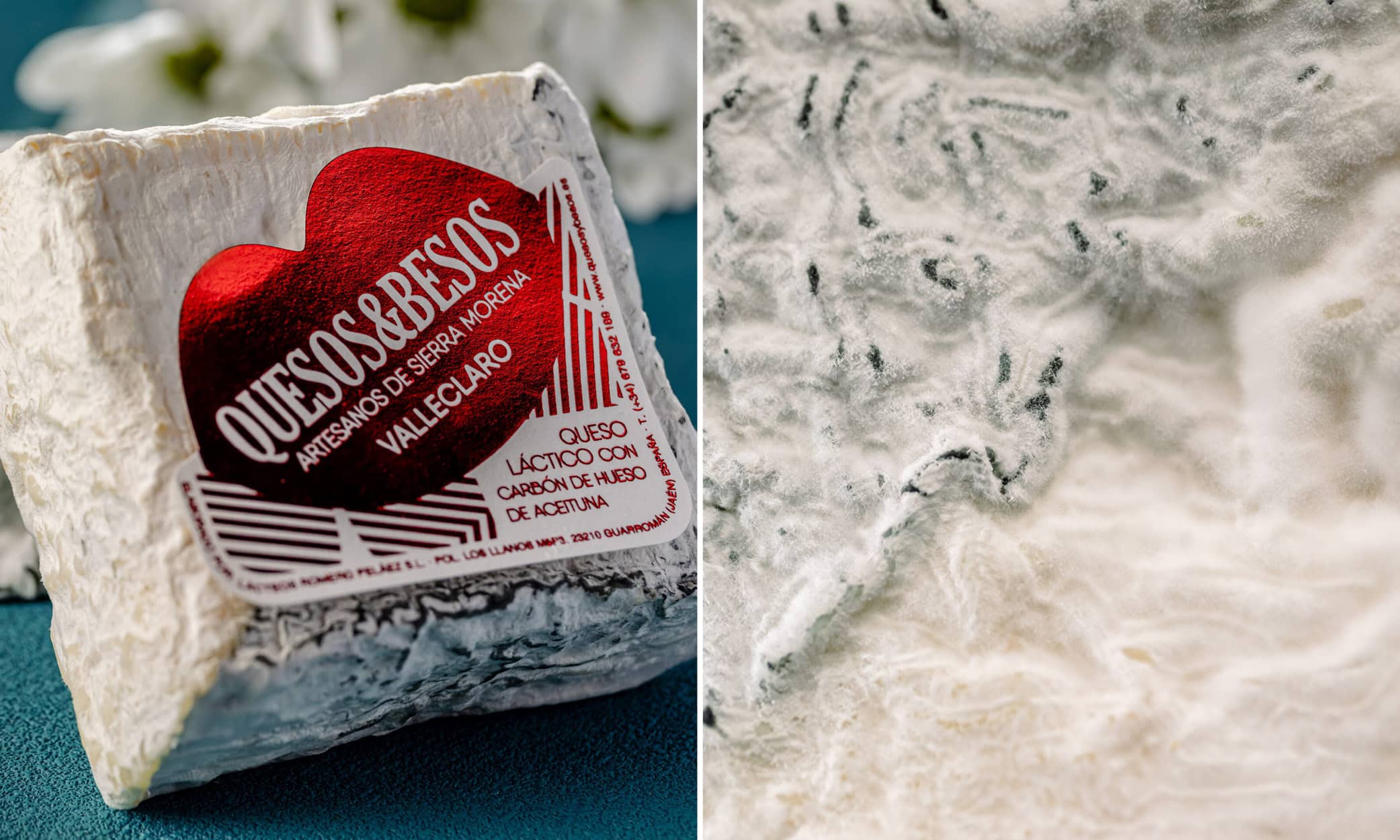
And there’s more! A Spanish queso also won the title of Best Cheese in the World for 2021, according to the 250 experts in the jury of the World Cheese Awards! The Andalucian goat’s cheese Olavidia was previously chosen as the best cheese in Spain, and now ‘Quesos y Besos’ cheesemakers from Guarromán, Jaén, can also count themselves amongst the best in the world, winning the 33rd edition ahead of 4,000 varieties from 47 countries. In the 2024 edition, ‘Quesos y Besos’ maintained its place in the illustrious Top 14 of the world’s best cheeses with Valleclaro cheese.
Where to buy
Some of these cheeses can be found in larger supermarkets, but many of the more traditional varieties are easier to discover in local food shops. Across towns on La Costa Brava, butcher’s shops and small delicatessens often sell regional cheeses alongside xarcuteria, olive oil and local wines.
From soft fresh cheeses such as mató to aged mountain varieties and local specialities like recuit, Catalunya offers a rich and diverse cheesemaking tradition. Exploring these flavours is one of the quieter pleasures of life on La Costa Brava.